


How to forecast business energy costs for more accurate budgeting and procurement planning
Accurately forecasting your business energy costs can help improve budgeting, support procurement decisions and reduce uncertainty ahead of contract renewals. By combining historical consumption data with planned operational changes and realistic assumptions, businesses can build more reliable energy forecasts and gain greater confidence when planning for the future.

For many businesses, energy is a significant operational cost. Whether you're setting budgets, preparing for a contract renewal or planning for growth, having a clearer view of future energy costs can help you make decisions with greater confidence.
The challenge is that energy consumption rarely stays the same. Operating hours change, equipment is upgraded and energy efficiency projects begin to deliver results. Even when usage remains relatively stable, the overall cost of energy can still be influenced by industry charges and wider market conditions.
Whilst no forecast can predict the future perfectly, building a realistic picture of future energy demand can help reduce uncertainty and give your business a stronger foundation for planning ahead.
Why forecasting matters
Forecasting energy costs isn't simply about estimating future bills. Done well, it can support:
- More accurate budgeting
- Better financial planning
- Greater confidence ahead of contract renewals
- More informed procurement decisions
- Improved visibility of operational costs
- Better understanding of energy efficiency investments
For businesses consuming more than 100,000 kWh annually, forecasting helps create a clearer link between business plans and future energy requirements.
How to forecast business energy costs
A practical approach to forecasting energy costs involves five key steps:
- Review historical energy consumption.
- Validate and clean your data.
- Identify future changes that could affect usage.
- Build realistic usage and cost scenarios.
- Review and update forecasts regularly.
Start with reliable data
The best forecasts start with high-quality historical data.
Review at least 12 months of energy consumption and look for patterns across:
- Monthly usage
- Seasonal fluctuations
- Weekday and weekend consumption
- Operating and non-operating hours
- Occupancy or activity levels
If you have access to smart meter or half-hourly data, you'll also be able to understand when energy is being consumed, providing valuable insight into operational trends.
Before building a forecast, sense-check your historical information.
For example:
- Were any bills based on estimated readings?
- Did operating hours change significantly?
- Was new equipment installed?
- Were there any unusual spikes in activity?
- Were there temporary closures or disruptions?
Removing one-off events helps create a more realistic baseline.
Understand what's likely to change
Historical energy data explains what happened. Forecasting requires you to think about what happens next.
Common factors that influence future energy demand include:
Business growth
Additional staff, new services or increased customer demand may increase energy usage.
Operating hours
Longer opening hours, additional shifts or greater occupancy can affect consumption.
Equipment and technology
EV chargers, heating systems, refrigeration equipment and other technology investments can influence future demand.
Energy efficiency improvements
LED lighting upgrades, building management systems and operational improvements may help reduce consumption over time.
The aim is not to predict every variable perfectly. It's to build a forecast that reflects the reality of where your business is heading.
Build a realistic forecast
Once you've reviewed the data and identified future changes, you can create a baseline forecast.
Let's say your business consumed 250,000 kWh during the previous 12 months.
You know that:
- Operating hours are increasing
- New equipment is being installed
- An efficiency project is expected to reduce usage
Your forecast should account for these changes.
A simple approach is:
Historical consumption + expected increases − expected reductions = forecast consumption
This won't guarantee perfect accuracy, but it will provide a much stronger planning assumption than relying solely on historical data.
Example
Annual consumption: 250,000 kWh
Expected increase from longer operating hours: +12,500 kWh
Expected reduction from efficiency improvements: −7,500 kWh
Forecast consumption:
250,000 + 12,500 − 7,500 = 255,000 kWh
This creates a more realistic view of future demand and provides a stronger starting point for budget planning.
Businesses with access to half-hourly meter data may choose to build more advanced forecasts using detailed consumption profiles, seasonal trends and weather-related demand patterns. However, for many organisations, adjusting historical consumption to reflect known business changes provides a practical and effective starting point.
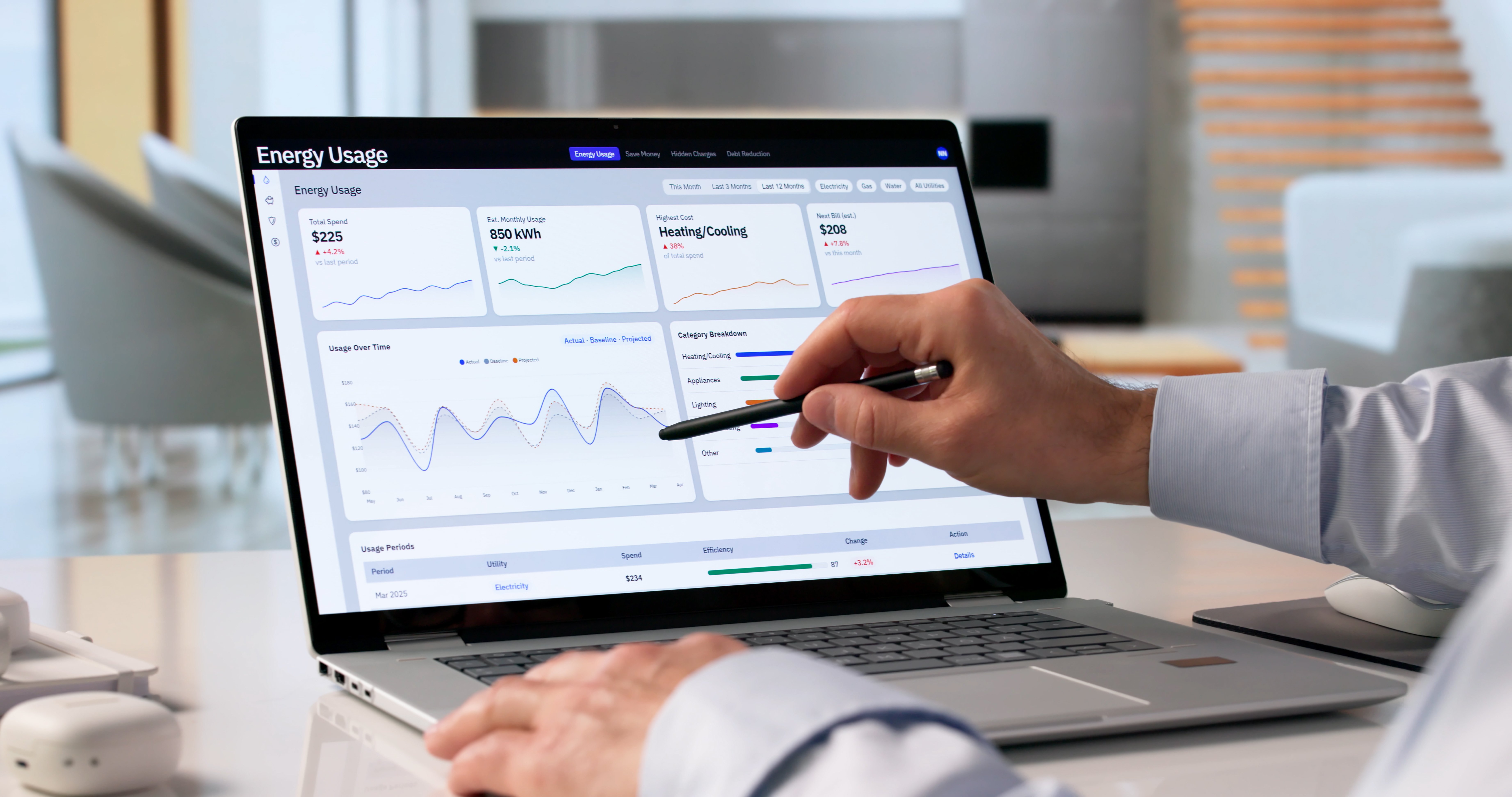
Consider different scenarios
Many businesses create a single forecast and assume it will be accurate.
In reality, business conditions change.
Instead, create three planning scenarios:
Baseline
Your most likely outcome based on current assumptions.
Higher-demand
Assumes stronger growth, increased occupancy or higher operational activity.
Lower-demand
Assumes reduced demand or greater-than-expected efficiency savings.
Scenario planning won't eliminate uncertainty, but it can help you understand potential outcomes and prepare for them.
Turn usage forecasts into cost forecasts
Forecasting consumption is only part of the picture. You also need to estimate how much that energy is likely to cost.
A simple starting point is:
Forecast consumption (kWh) × expected unit rate = estimated energy cost
However, energy costs often include more than the energy itself.
Depending on your contract structure, overall costs may also include:
- Network charges
- Metering costs
- Industry and policy costs
- Other non-energy charges
Understanding pass-through costs is particularly important, as these can account for a significant proportion of a business energy bill and may change during your contract term.
If you're reviewing future expenditure, it's also worth understanding the wider factors behind higher business energy costs, including wholesale market movements and increasing network investment.
How forecasting supports procurement decisions
Accurate forecasting can strengthen procurement conversations by giving businesses a clearer understanding of future requirements.
It can help you:
- Build more accurate budgets
- Understand future cost exposure
- Compare supplier proposals consistently
- Prepare earlier for contract renewals
- Identify solutions that align with business needs
The more confidence you have in your future energy requirements, the easier it becomes to evaluate options and make informed decisions ahead of a business energy contract renewal.
Review forecasts regularly
Forecasting should be an ongoing process rather than a one-off exercise.
Business priorities change, assumptions evolve and forecasts should adapt accordingly.
A quarterly review can help answer:
- Are we using more or less energy than expected?
- Have business plans changed?
- Are efficiency measures delivering the expected results?
- Do our assumptions still reflect reality?
A useful approach is:
Forecast → Monitor → Compare → Update
Over time, this process helps improve forecasting accuracy and build confidence in future planning.
Make your energy data work harder
Forecasting isn't about predicting the future perfectly. It's about creating a clearer picture of future energy requirements so you can make decisions with greater confidence.
By combining historical data, operational insight and realistic assumptions, businesses can strengthen budgeting, improve planning and prepare more effectively for future energy decisions.
For businesses consuming more than 100,000kWh annually, SmartestEnergy Business provides fixed-price and bespoke energy solutions, transparent billing and dedicated support designed to help businesses stay in control of their energy costs and plan for the future with confidence.
Frequently asked questions
How accurate should a business energy forecast be?
No forecast will ever be 100% accurate. The goal is to create a realistic estimate that supports planning, budgeting and procurement decisions. Regular reviews will help improve accuracy over time.
How far ahead should businesses forecast energy costs?
Most organisations should maintain at least a 12-month forecast. If a contract renewal is approaching, forecasting several months ahead can provide greater visibility during supplier discussions.
What data is needed to forecast energy usage?
To create an accurate forecast, it's helpful to have historical consumption data, meter readings, operating hours, planned business changes, and any expected efficiency improvements. The more complete your data, the more useful the forecast will be.
How often should forecasts be reviewed?
Quarterly reviews are a sensible starting point for most organisations. Businesses experiencing significant change may benefit from reviewing forecasts more frequently.
Related content

How to choose the right business energy supplier

Guiding Customers Through Financial Difficulty

Celebrating 100,000 trees planted in our climate action journey

Reduce business energy bills: simple ways for SMEs to cut costs
